


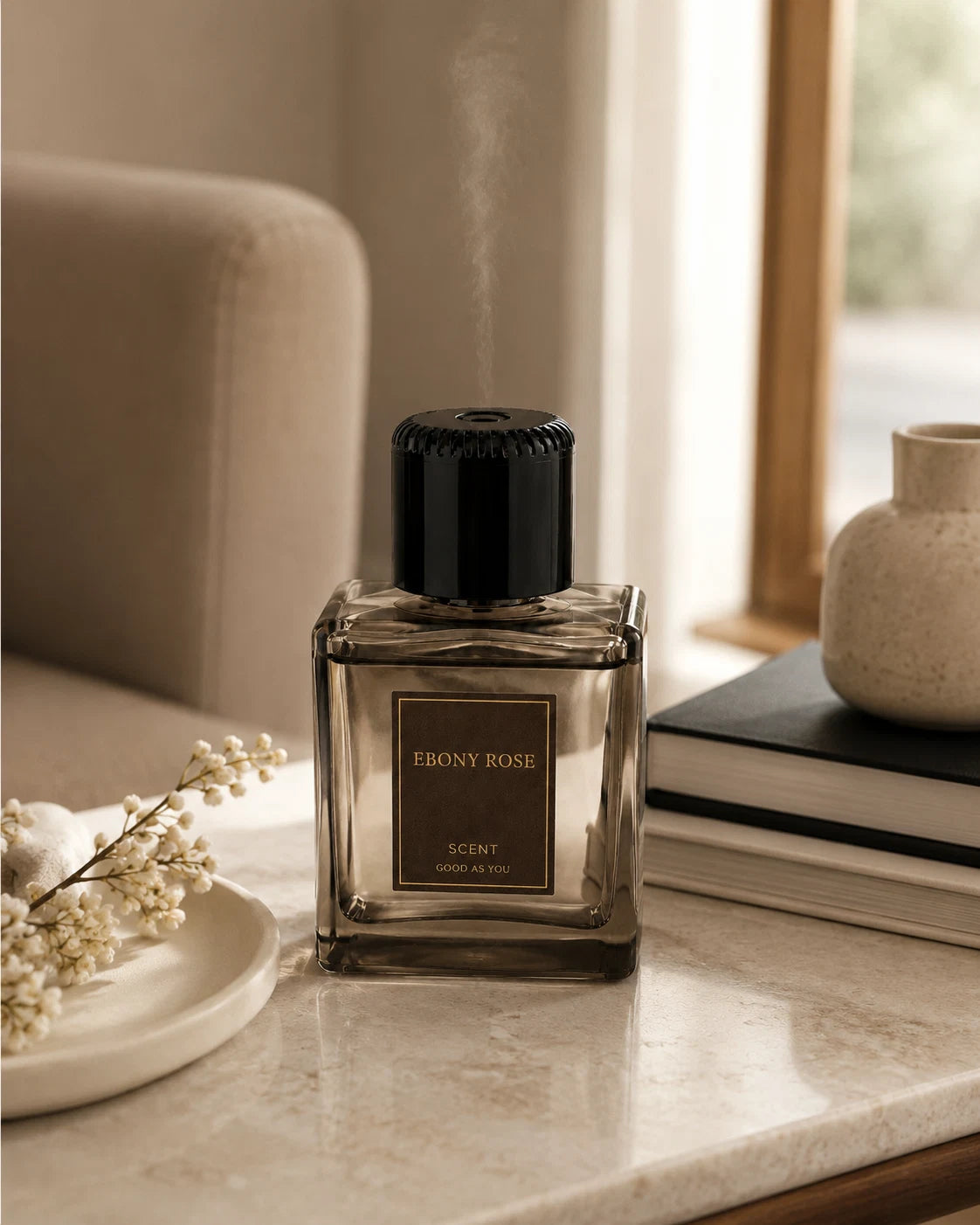



Waterless vs ultrasonic diffuser is mainly a choice between two different fragrance routines. A waterless device works without a water reservoir. An ultrasonic diffuser normally uses water and vibration to create a water-based mist. Neither format is best for everyone, and the word “waterless” does not prove that every product uses the same internal technology.
Waterless vs ultrasonic diffuser: the practical difference
A refill-based waterless diffuser asks you to use a compatible fragrance solution, select the device setting, and monitor the refill and outlet. An ultrasonic diffuser asks you to fill a reservoir with water, add only a compatible aromatic product as directed, choose its timer or mist setting, and clean the reservoir.
The decision should be based on which method you will maintain correctly. It should not be based on unsupported promises about therapy, air cleaning, or a universal coverage area.
Evaluation criteria before you choose
- Liquid routine: do you prefer a ready compatible refill or a water-reservoir process?
- Controls: which timing and output options will you actually use?
- Cleaning: are you prepared to care for an outlet, a refill system, or a water tank?
- Placement: where can the unit remain upright and stable without affecting nearby surfaces?
- Compatibility: can you reliably obtain and follow the correct liquid instructions?
- Shared-space fit: will other people in the room be comfortable with fragrance?
Waterless and ultrasonic diffuser comparison
| Factor | Waterless refill-based device | Ultrasonic device |
|---|---|---|
| Water | No water reservoir in the fragrance routine | Usually requires a filled water reservoir |
| Fragrance input | Compatible solution specified for the device | Compatible aromatic product used with water as directed |
| Mist control | Depends on product; Plume has timed mist and a short boost | Depends on product; commonly has mist and timer settings |
| Routine maintenance | Refill, outlet, and approved cleaning process | Reservoir emptying and cleaning process |
| Main misuse risk | Adding an incompatible liquid or water | Using an unsuitable oil or neglecting the reservoir |
| Good fit | Someone who prefers a refill-based automatic routine | Someone who specifically wants a water-based mist routine |
These are common differences, not universal specifications. Check each model before purchasing.
 How Plume works as a waterless option
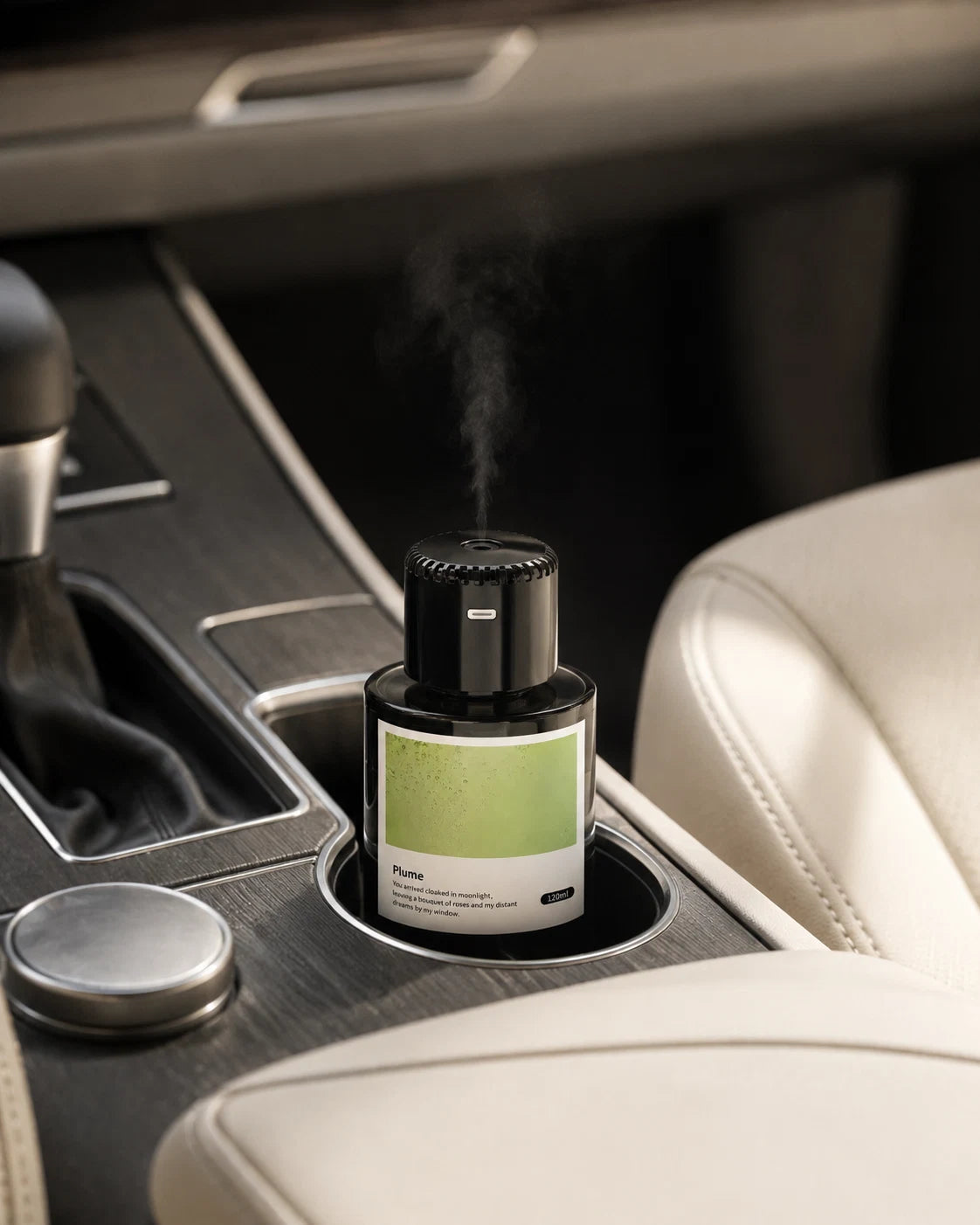
Plume uses compatible fragrance solution and does not require water. Its built-in rechargeable battery supports four verified modes: three seconds every minute, every ten minutes, or every thirty minutes, plus a continuous boost that stops after fifteen minutes.
Those settings provide frequency choices, not a guaranteed fragrance level. The result depends on airflow, room use, fragrance, placement, and personal preference. A practical method is to start with the thirty-minute mode in a small room and increase only if needed.
Which option fits common scenarios?
You want minimal water handling
A waterless diffuser may fit if you prefer installing a compatible refill rather than filling and emptying a tank. The trade-off is that you must respect refill compatibility.
You specifically enjoy a water-mist routine
An ultrasonic diffuser may fit if filling and cleaning a reservoir is part of the experience you want. Follow its limits for water level and aromatic products.
You need a device for a suitable car space
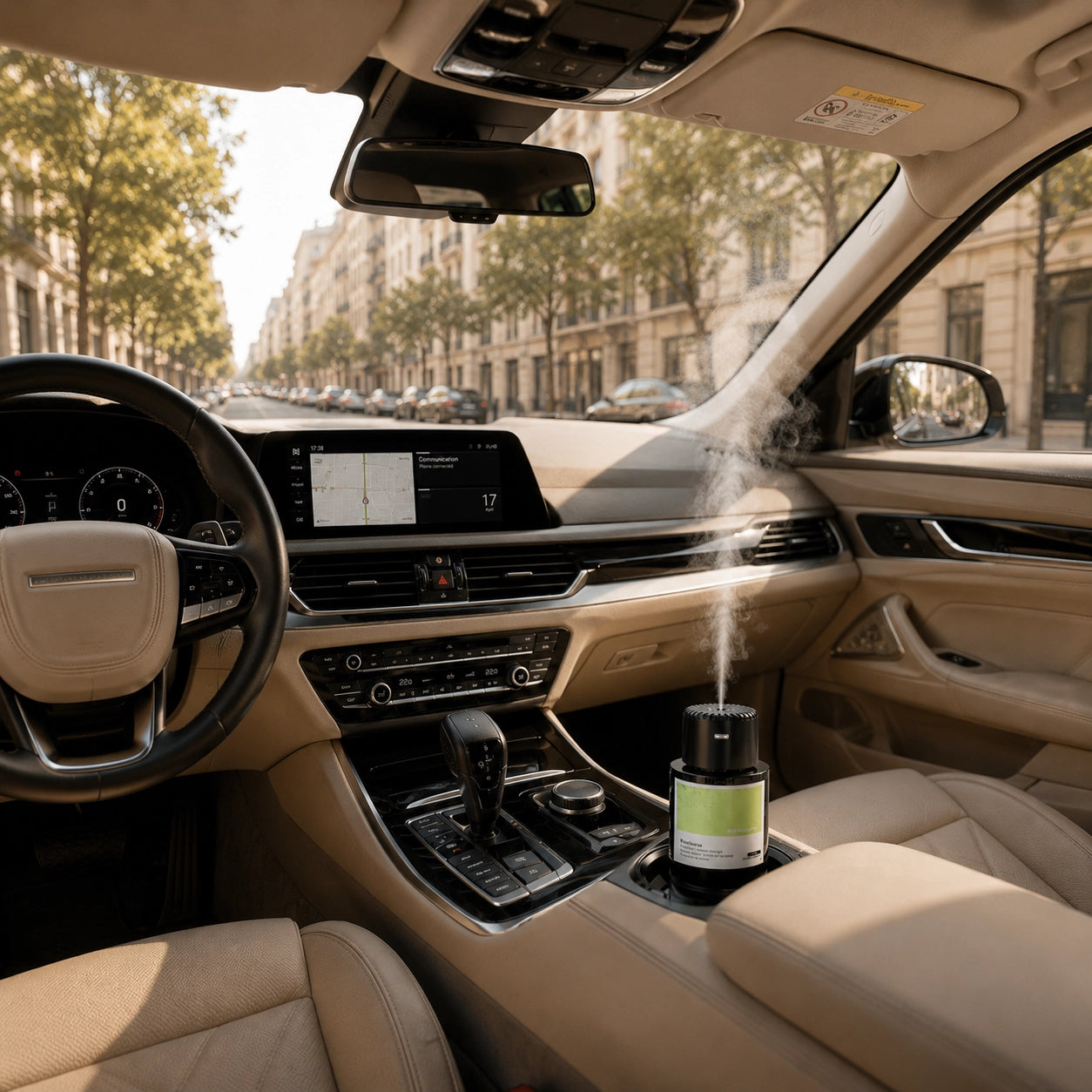
A stable refill-based device may be considered only if its instructions allow the use case. Set it up while parked, do not block driving functions, and do not adjust it while driving. A reservoir device may be less practical where movement can disturb water, but compatibility still depends on the actual model.
You share the room
Neither technology solves fragrance sensitivity. Discuss the use with others, ventilate the space, start low, and stop if discomfort occurs.
 Common mistakes and limitations
- Adding water to a waterless device because another diffuser used it.
- Pouring undiluted or unknown liquid into a product without checking instructions.
- Assuming all waterless products are nebulizers.
- Choosing by claimed room size without reviewing how the figure was tested.
- Expecting fragrance to purify air or produce a medical outcome.
A practical tip is to keep the original instructions and refill information together. If performance changes, check the selected mode, liquid level, placement, power, and approved maintenance steps before drawing conclusions.
About the Brand
EterLove makes Plume for people who prefer a controlled, refill-based room-fragrance routine. Our brand expertise is limited to the verified product controls and compatible refill system. We do not present the device as ultrasonic, medical, therapeutic, or universally compatible.
Frequently Asked Questions
Which type needs water?
An ultrasonic diffuser normally uses a water reservoir. Plume is waterless and should not be filled with water.
Can essential oils be used in both?
Only when the specific instructions confirm compatibility. Do not assume that an oil suitable for one format is suitable for another.
Which is easier to maintain?
That depends on your routine. One requires refill and outlet care; the other usually requires reservoir care.
Which is better for a small room?
Choose a model with controls and placement conditions that fit the room. Begin conservatively because fragrance preference and ventilation vary.
Review the refill-based option
If a waterless routine matches your criteria, review the Plume Automatic Scent Diffuser and its current settings. Use only the compatible Plume Fragrance Refill as directed.


Leave a comment
This site is protected by hCaptcha and the hCaptcha Privacy Policy and Terms of Service apply.