





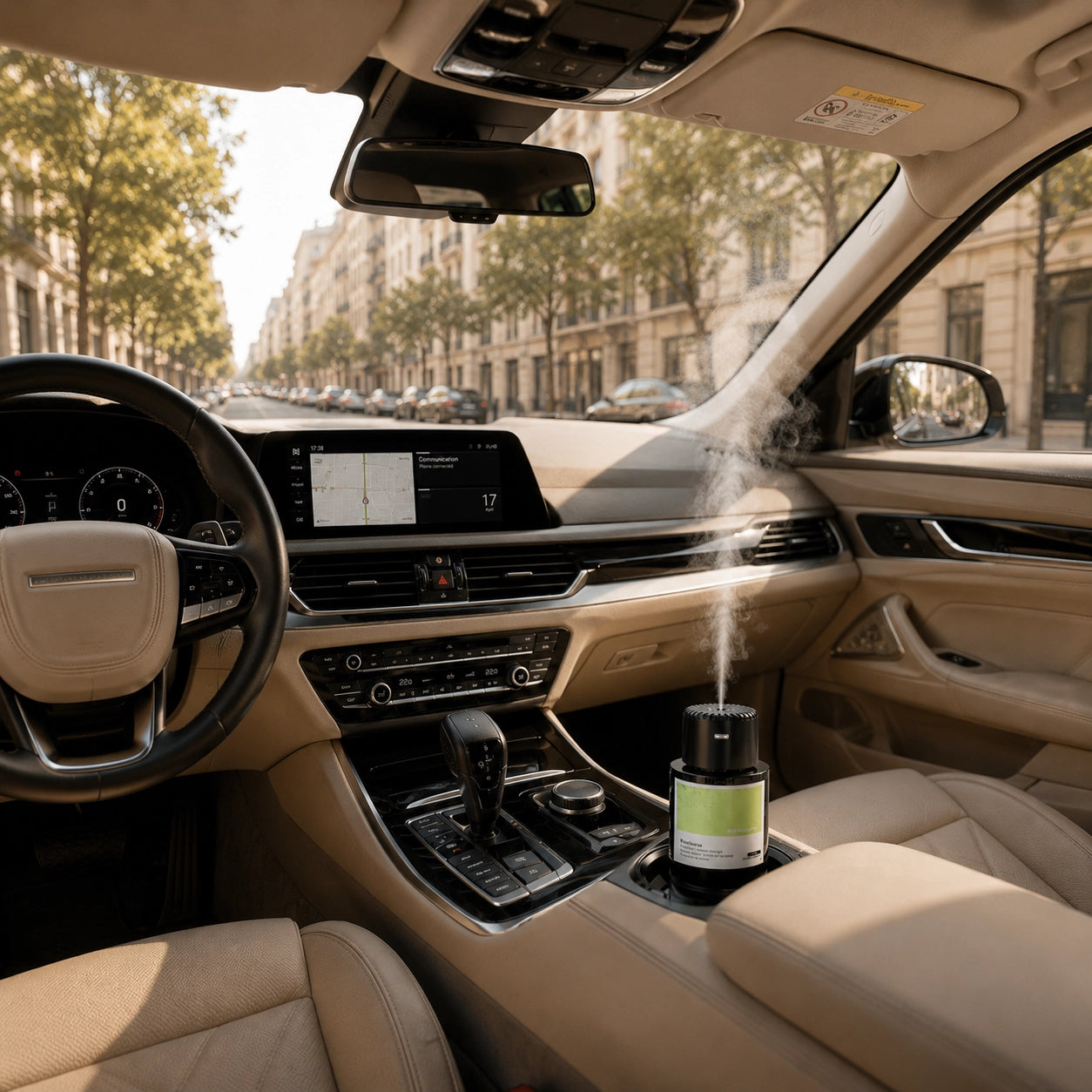


The best smart diffuser is the one that makes fragrance easier to manage in your actual space—not the one with the longest feature list. A good choice matches your preferred control method, the room’s airflow and occupancy, the refill and cleaning routine you can maintain, and the amount of software dependence you are comfortable accepting. This selection guide focuses on those decisions rather than declaring one option suitable for everyone.
Best smart diffuser choices start with the problem you want to solve
Before comparing features, define the inconvenience you want the diffuser to remove. You may want fragrance to begin before you enter a room, reduce output during unoccupied hours, make intensity changes without reaching the device, or coordinate scent with a predictable daily routine. Each goal points to a different control requirement.
A buyer who mainly wants regular unattended fragrance may not need an elaborate connected setup. Someone who changes schedules frequently may value remote adjustment more. If you are still deciding whether connected controls are necessary at all, the smart scent diffuser versus automatic scent diffuser comparison separates those two buying paths.
Compare control methods before convenience claims
The word “smart” does not guarantee one standard control experience. Depending on the product, control may happen through physical buttons, a remote, an app, a connected-home platform, or a combination. Verify the current product instructions instead of assuming that a smart label includes every method.
| Control question | Why it matters | Trade-off to consider |
|---|---|---|
| Can core settings be changed on the device? | Local controls keep the diffuser usable when a phone or network is unavailable. | A minimal interface may offer fewer adjustments. |
| Can a routine be scheduled? | Scheduling can align fragrance with occupied hours. | Check what happens after power or connectivity interruptions. |
| Can intensity be adjusted clearly? | Small rooms and shared spaces often need conservative settings. | More levels do not automatically mean more consistent fragrance. |
| Does control require an account? | Account requirements affect setup, privacy, and shared access. | Software support can change over a product’s life. |
 Separate smart convenience from scent performance
Connected control can make a routine more convenient, but it does not by itself prove that fragrance will spread evenly or suit a particular room. Scent perception also depends on delivery format, placement, airflow, room volume, open doors, and how long people remain in the space. Treat coverage as a product-specific claim and evaluate the fragrance mechanism and physical placement with the same care you give the controls.
For example, remote intensity adjustment is useful in a home office only if the device is positioned where the outlet is not blocked and the fragrance does not aim directly at the desk. In a larger shared room, one highly active source may be less comfortable than a conservative setting in a better location. Use the home scent diffuser buying guide to evaluate room needs before treating connectivity as the deciding factor.
Choose by use case, not by feature count
| Use case | Prioritize | Be cautious about |
|---|---|---|
| Bedroom routine | Quiet controls, low starting output, easy manual override | Strong schedules that continue after the room is occupied |
| Home office | Quick intensity changes and dependable local control | Placement too close to the user or electronics |
| Living area | Shared access, flexible timing, sensible placement | Assuming one setting suits every visitor |
| Occasional use | Simple setup and straightforward storage | Paying for software features you rarely use |
Who is a smart diffuser for? It can fit people with repeatable routines, changing occupancy, hard-to-reach placement, or a genuine need for remote adjustments. Who is it not for? A connected product may be unnecessary for someone who prefers a simple manual ritual, dislikes account-based controls, or uses fragrance only occasionally.
Refill and maintenance fit determine long-term convenience
A convenient interface cannot rescue an inconvenient ownership routine. Confirm the required refill format, whether substitutions are allowed, how the fragrance path is cleaned, and what storage steps apply between uses. Never assume that two liquids are interchangeable because they look similar. The device instructions and refill information should be the deciding sources.
Also consider who will maintain the diffuser. Shared households benefit from clear settings and a refill process that does not require guesswork. If one person controls the account while someone else handles refills, decide how both people will access the information they need.
Placement and intensity still require observation
Even when a device offers remote adjustment, begin with a conservative setting and observe the room. Avoid blocked outlets, direct drafts, enclosed furniture, and positions where fragrance releases immediately beside a person. If output feels too strong, reduce the setting or active period before moving to a more complicated solution. The guide to adjusting diffuser scent strength provides a practical process.
Automatic operation also deserves a basic understanding. The automatic diffuser mechanism guide explains how controlled release differs from continuous passive fragrance without turning this buying guide into a technical definition.
Privacy, software, and manual fallback checks
When software is part of the experience, review the information the current product documentation provides about account access, permissions, updates, and household sharing. Do not infer privacy protections that are not stated. A useful manual fallback matters if the network is unavailable, a phone is replaced, or a guest needs to stop the device quickly.
These questions do not make connected control undesirable; they make the purchase more deliberate. The best choice is a control system whose dependencies you understand and accept.
A practical smart diffuser buying checklist
- Describe the room, occupied hours, and fragrance problem you want to solve.
- Confirm the exact control methods in the current product information.
- Check whether essential settings remain available locally.
- Evaluate fragrance delivery, placement, and intensity separately from connectivity.
- Verify the specified refill format and maintenance steps.
- Review account, sharing, privacy, and software dependencies.
- Choose the simplest option that reliably supports your routine.
 Decision support: how to make the final choice
Choose a smart diffuser when connected control solves a repeated practical problem and the underlying fragrance format fits your room. Favor transparent controls, a workable refill routine, and easy manual intervention over secondary features. If two options meet the same core need, choose between them using maintenance effort, placement flexibility, and control dependence—not a generic feature hierarchy.
Next step: verify the product against your shortlist
Once you have reduced the decision to the controls, room fit, and ownership routine you actually need, compare those requirements with current product information. Confirm every capability, refill condition, and operating instruction on the relevant product page; a missing specification should remain an open question rather than an assumed feature.
Frequently Asked Questions
What makes a smart diffuser worth choosing?
It is worth considering when remote or scheduled control removes a real inconvenience and the device’s fragrance format, placement needs, refill routine, and manual controls also fit the space.
Does a smart diffuser require Wi-Fi?
Not every product uses the same connection method. Check the current product documentation for its exact control requirements rather than assuming Wi-Fi, Bluetooth, or app support.
How should a smart diffuser be placed?
Follow the product instructions, keep the fragrance outlet clear, avoid direct drafts and close proximity to people, and start conservatively while observing how fragrance moves through the room.


Leave a comment
This site is protected by hCaptcha and the hCaptcha Privacy Policy and Terms of Service apply.